The dashboard displays an orange warning light marked “EDC,” and the engine feels sluggish. An illuminated EDC warning light indicates a fault detected by the electronic control unit that manages diesel injection. It does not point to one specific broken part, but to a problem somewhere in the fuel supply system or its sensors. Understanding what it means helps you avoid guesswork and unnecessary part replacements.
EDC warning light and limp mode: what the control unit is protecting
EDC stands for Electronic Diesel Control. This system controls the amount of fuel injected, the precise timing of injection, and the pressure in the common rail. When a parameter falls outside its normal range, the control unit turns on the warning light and may switch the engine into limp mode.
Have you noticed that the vehicle will not go above a certain speed or that the accelerator no longer responds normally? That is limp mode. The control unit deliberately limits power to prevent more serious mechanical damage. The engine keeps running, but at a restricted speed.
One point that standard guides rarely mention: the control unit may store old, resolved faults alongside the active fault. Reading the error codes is not enough; you need to distinguish the current problem from stored history. Without that distinction, you risk replacing a part that was working properly. To learn more about the meaning of the EDC warning light, always compare the displayed code with the engine’s actual behavior.

Fuel filter, sensors, injectors: locating the EDC fault
The warning light is on, but where should you look? Most faults occur in one of three areas.
Clogged diesel fuel filter
This is the most common cause. A clogged filter reduces the flow of fuel to the high-pressure pump. The control unit detects a drop in rail pressure and turns on the warning light. In very cold weather, diesel can also partially gel in the filter, producing the same effect.
Replacing the diesel fuel filter should be your first step. It is inexpensive and rules out the most common cause before you investigate further.
Pressure sensor and rail regulator
The common-rail pressure sensor continuously measures fuel pressure. If it sends an implausible reading, the control unit triggers the warning. The regulator adjusts the pressure by returning excess fuel to the tank. A sticking regulator or faulty sensor can produce similar symptoms: jerking, loss of power, and a steady EDC warning light.
Injectors and high-pressure pump
Worn or clogged injectors change the actual fuel delivery compared with what the control unit commands. As the high-pressure pump wears out, it can no longer maintain the required pressure. These faults are more expensive to repair, but they often leave traces in the error codes as differences in fuel delivery between cylinders.
EDC warning light OBD diagnostics: why the tool matters as much as the code
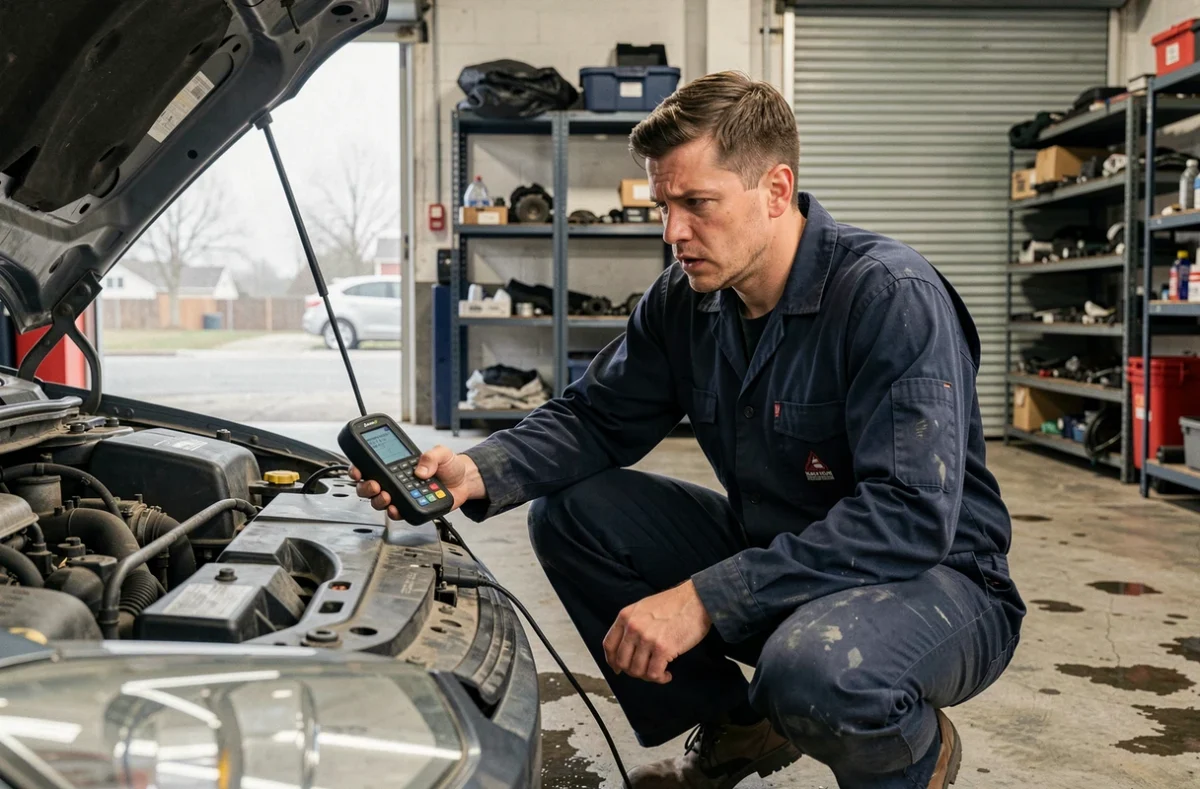
Connecting an OBD reader to the vehicle’s diagnostic port displays one or more error codes. These codes point to a circuit or sensor, but they do not always identify the root cause.
A generic OBD reader (the kind sold for a few dozen euros) reads standardized codes. On an Iveco Daily or a recent diesel van, some manufacturer-specific data remains inaccessible with this basic tool. A manufacturer-compatible tool is often needed to access real-time rail pressure readings, injector corrections, or the status of the emissions control system.
Diagnostics should make it possible to check the following:
- Active error codes (current faults) and stored codes (history), so you do not confuse a resolved fault with the current problem
- Fuel pressure measured by the rail sensor compared with the pressure commanded by the control unit, to identify any abnormal difference
- Injector correction values, which show whether an injector is delivering too much or too little fuel compared with the target
- The status of the emissions control system (particulate filter, SCR/AdBlue system on recent diesel vehicles), since an emissions fault can also limit power and turn on the EDC warning light

EDC warning light comes on while driving: what to do immediately
The warning light’s color gives you an initial indication. An orange warning light generally means you can continue driving cautiously to a garage. A red warning light means you should stop as soon as possible, as the risk of engine damage is high.
If the warning light is orange, slow down. Limp mode is already limiting power; pressing the accelerator harder will not help and may make things worse. Head to a safe place or a nearby workshop.
Before taking your vehicle to a mechanic, you can carry out a few quick checks:
- Check the engine oil and coolant levels; low levels can trigger a related warning
- Make sure the coolant reservoir cap is properly closed
- If your vehicle has an AdBlue tank, check its level, as an empty tank causes a gradual reduction in power on recent models
The warning light may sometimes go out after restarting the engine. That does not mean the problem has gone away. The fault remains stored in the control unit and can return at any time, often in less favorable circumstances.
Do not replace parts at random. A full diagnostic check, including active codes and real-time readings, can prevent you from replacing a sensor when all that was needed was a new diesel fuel filter. Every part replaced without certainty costs time and money, with no guarantee that it will solve the problem.