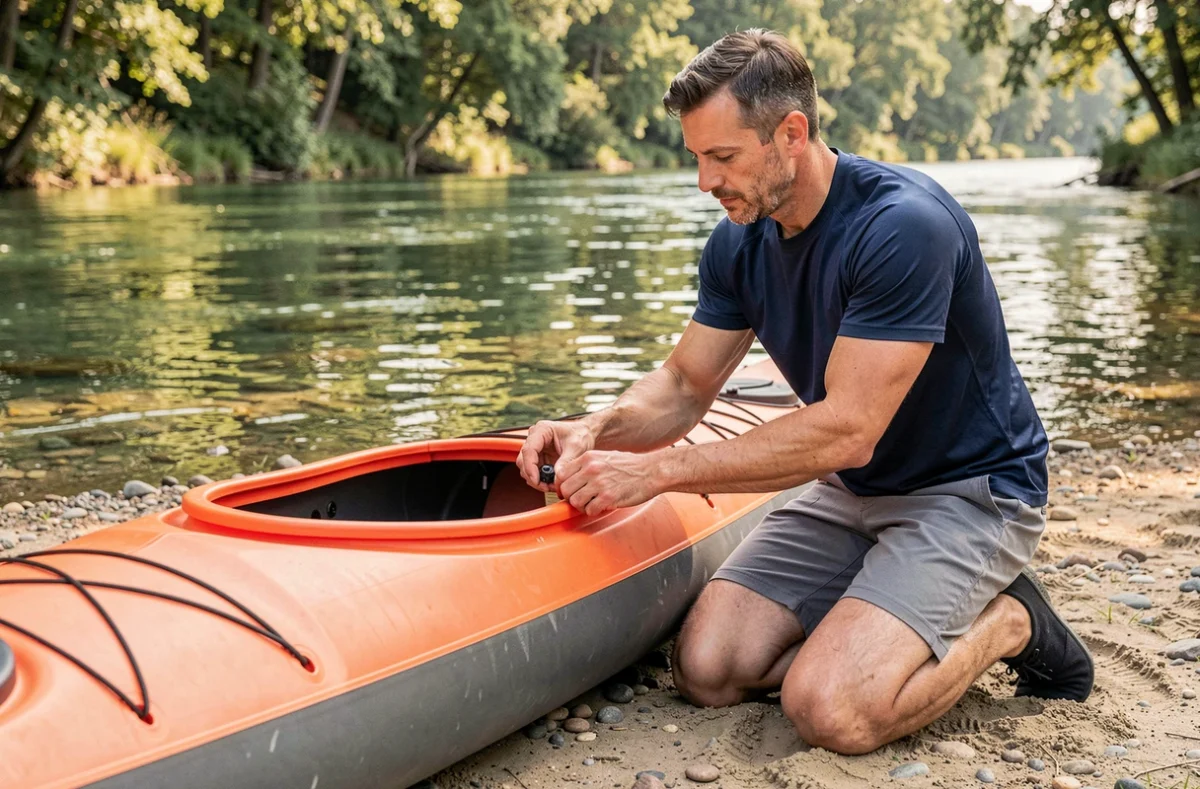
An inflatable kayak costing less than two hundred euros and a high-pressure model sold for three times the price share the same promise: to fit into a bag and inflate in a few minutes. However, the differences in performance on the water are incomparable. Understanding what truly separates these vessels requires looking beyond the number of seats or color.
The criteria that matter are often those that product specifications relegate to the bottom of the page: inflation pressure, quality of assembly, reparability.
Inflation Pressure and Rigidity: The Factor Product Specifications Overlook
The inflation pressure directly affects the rigidity of the hull and, by extension, the tracking. An under-inflated kayak flexes with every paddle stroke, drifts more with the wind, and requires constant corrections. Under-inflation degrades tracking and glide, turning a pleasant outing into an exercise in patience.
Conversely, over-inflation stresses the seams and valves, especially when the temperature rises during the day. Direct sunlight on a fully inflated hull in the morning can cause the internal pressure to exceed the tolerances set by the manufacturer.
A reliable pressure gauge and strict adherence to the manufacturer’s recommended pressure are therefore prerequisites. High-pressure models (dropstitch technology) offer significantly greater rigidity than classic PVC kayaks, resulting in better speed and a more stable trajectory. To choose the right inflatable kayak, this parameter deserves to be checked even before looking at the dimensions.
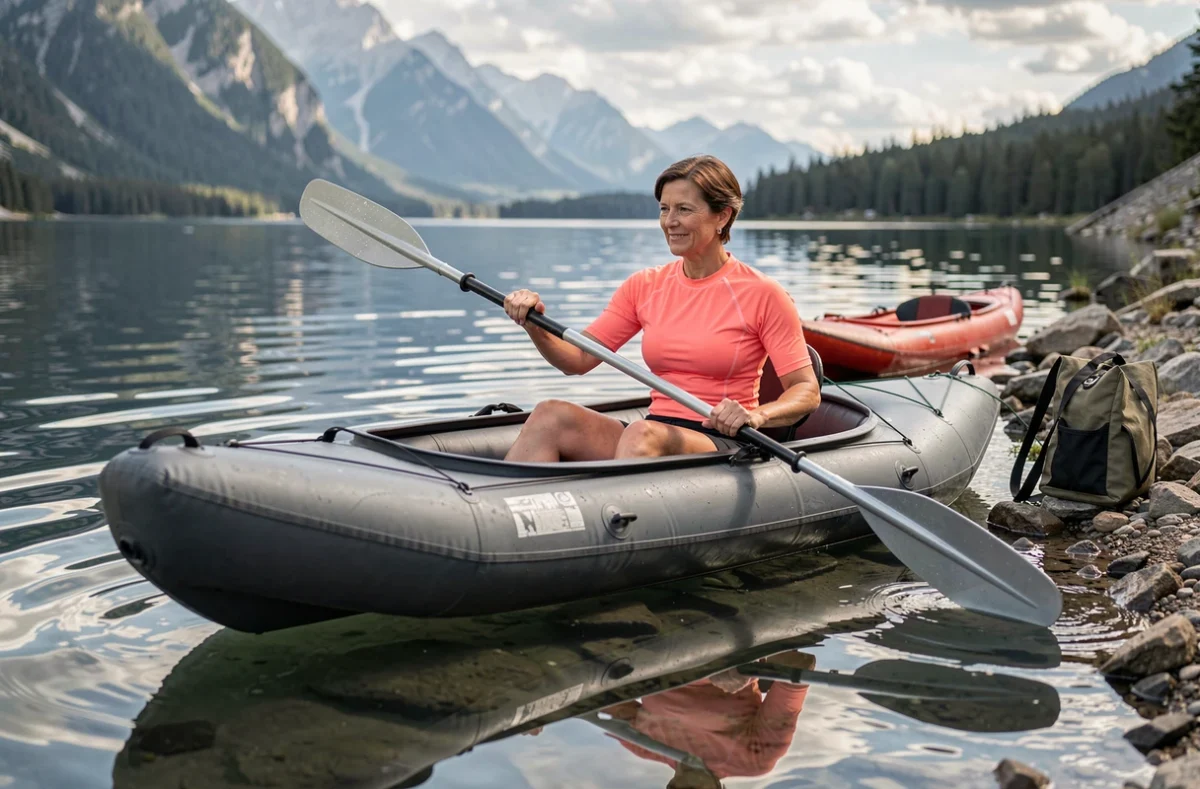
Comparison Table: Classic Inflatable Kayak vs. High-Pressure Model
| Criterion | Classic Inflatable Kayak (PVC) | High-Pressure Kayak (dropstitch) |
|---|---|---|
| Rigidity | Medium, flexes under effort | High, close to a rigid kayak |
| Tracking | Frequent corrections, drifts with the wind | Stable trajectory, less effort |
| Glide Speed | Limited | Significantly higher |
| Weight when folded | Light | Heavier |
| Storage Compactness | Very compact | Compact but bulkier |
| Price Range | Entry-level to mid-range | Mid-range to high-end |
| Reparability | Simple patches often sufficient | Repairs can be complex (valves, welded seams) |
This table highlights a central trade-off. Stability and speed increase with pressure, but weight and price follow. An occasional paddler on calm lakes does not have the same requirements as a hiker who spends several hours in windy conditions.
Seams and Reinforcement Areas: Where Real Durability is Determined
The main material (PVC, reinforced nylon, Hypalon) draws attention, but the quality of the assembly influences longevity more. Welded seams resist abrasion better than simply glued seams. Reinforcements at the bow and stern protect areas that absorb shocks during launches on rocky shores.
The design of the valves also deserves careful examination. A poorly designed or fragile valve can become an early point of leakage. User feedback indicates that leaks near the valves sometimes require intervention from the manufacturer or a professional, as a simple patch may not suffice.
Points to Inspect Before Purchase
- The main seams: welded at high frequency or simply glued. Welds provide better air retention over time.
- The reinforcements on the hull bottom: a kayak used in shallow rivers needs additional protection against abrasion on pebbles.
- The type of valve: classic Boston valve or high-pressure valve with locking. The latter limits air loss during inflation and facilitates deflation.
- The availability of spare parts: valves, seats, fins, compatible pump. An unrepairable kayak becomes waste in one season.
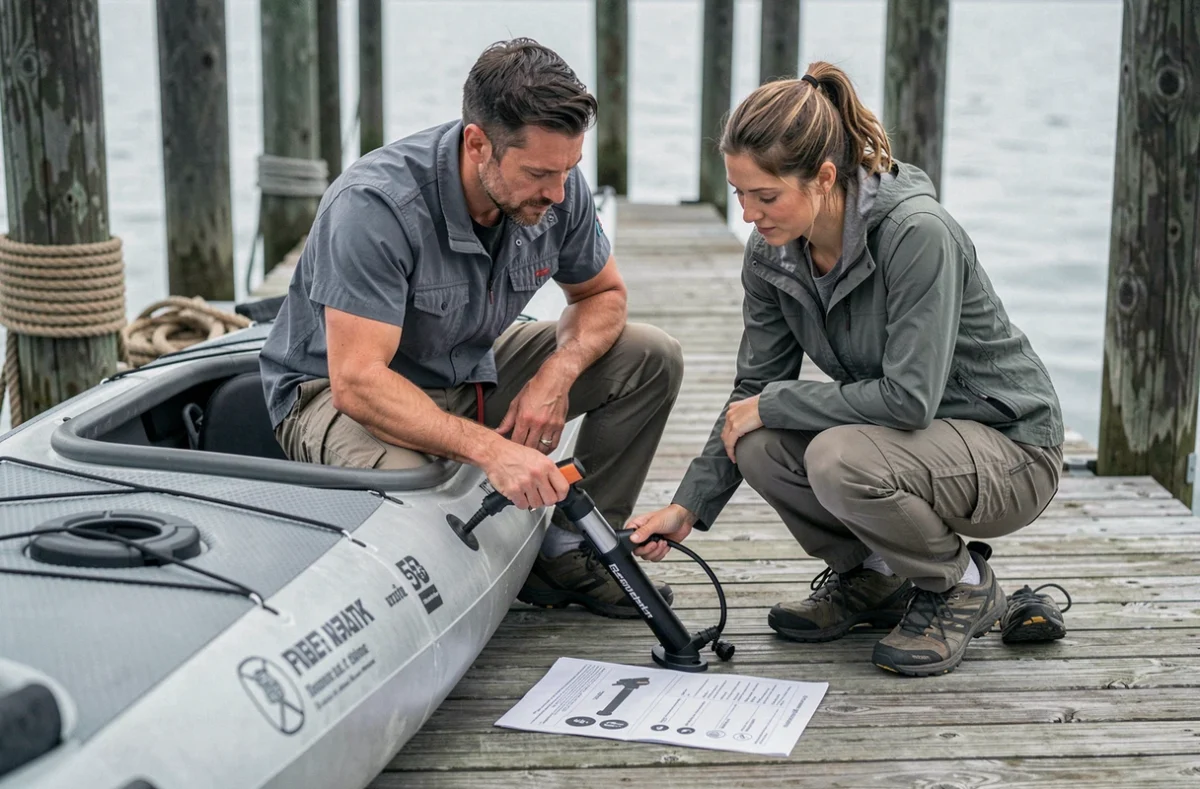
Stability vs. Glide Performance: The Compromise to Decide Based on Your Use
Wide and short models prioritize stability. They reassure beginners and are suitable for family outings in calm water. However, this width hinders glide and amplifies lateral wind resistance.
Narrower and longer models glide better and maintain a straighter course. They require better balance and a more consistent paddling technique. Users report that some entry-level models drift significantly with the wind, making crossings of water bodies tiring.
The presence of a removable fin significantly improves tracking on wide models. Checking if a fin is included or available as an option can change the boating experience without changing kayaks.
Number of Seats and Seating Comfort
A two-person kayak used solo offers more storage space, but it is heavier to maneuver and less responsive. Conversely, a single-seater loaded to its maximum capacity loses stability and comfort.
The adjustable inflatable seat makes a noticeable difference on long outings. A seatback that is too low can cause lower back pain after an hour of paddling. Some models allow repositioning the seat to adjust the kayak’s trim based on the load carried.
Regulations and Access to Water Bodies: Check Before Inflating
Depending on the kayak’s characteristics and the navigation area, local rules may restrict or prohibit access. Beach crafts, a category that includes some inflatable kayaks, are limited to a restricted coastal strip. Navigating beyond this requires additional safety equipment.
Recent regulations have modernized the obligations regarding safety devices for coastal navigation. Before any outing at sea or on a regulated water body, checking local requirements avoids fines and, more importantly, real risks.
- Check if the kayak is classified as a beach craft or vessel based on its length and usage area.
- Bring mandatory equipment: buoyancy vest, means of light signaling, sound signaling device depending on the area.
- Consult municipal or prefectural orders regarding inland water bodies, which may prohibit certain vessels.
The choice of an inflatable kayak boils down to three technical questions: what inflation pressure for what behavior on the water, what quality of assembly for what lifespan, and what width-length compromise for what actual use. Reparability and availability of spare parts remain the most often overlooked criterion, the one that determines whether your kayak lasts a season or ten.