Squeaky stairs with every step can turn a staircase climb into an unwanted auditory experience. Whether in a charming old house or a modern apartment, a noisy staircase can disrupt the tranquility of a home. Beyond the annoying aspect, it can also signal a structural problem that requires immediate attention. Fortunately, there are several methods to remedy this discomfort, ranging from quick and temporary solutions to more in-depth and lasting repairs.
Diagnosis and Causes of a Squeaky Staircase
The quest for silence in a home often involves addressing a common yet bothersome issue: the squeaky staircase. Before tackling solutions, it’s essential to understand the causes of this squeaking. Wood, a living material and the main component of the staircase, reacts to environmental conditions: humidity and temperature can indeed cause it to swell or shrink, leading to friction between the treads, risers, and the stringer. These movements create gaps and tensions, which are the sources of squeaking when pressure is applied by the weight of footsteps.
Identifying the specific faulty element is crucial for effective repair. Is it the friction between the tread and the riser? A gap at the fastenings on the stringer? Or a deeper problem at the heart of the material itself? The staircase, subject to these phenomena, requires careful analysis. Each noise can be a symptom of a specific problem, and pinpointing its exact location is a fundamental step in the repair process.
Once the diagnosis is made, various solutions can be considered, each tailored to the nature of the identified problem. Among the first reflexes, applying a lubricant like the famous squeaky staircase: WD40 can sometimes suffice to resolve cases of light squeaking. For more persistent issues, other interventions will be necessary, such as reinforcing fastenings or filling empty spaces. Consider the appropriate materials and methods to ensure a durable repair and a silent staircase.
Strategies and Methods to Repair a Squeaky Staircase
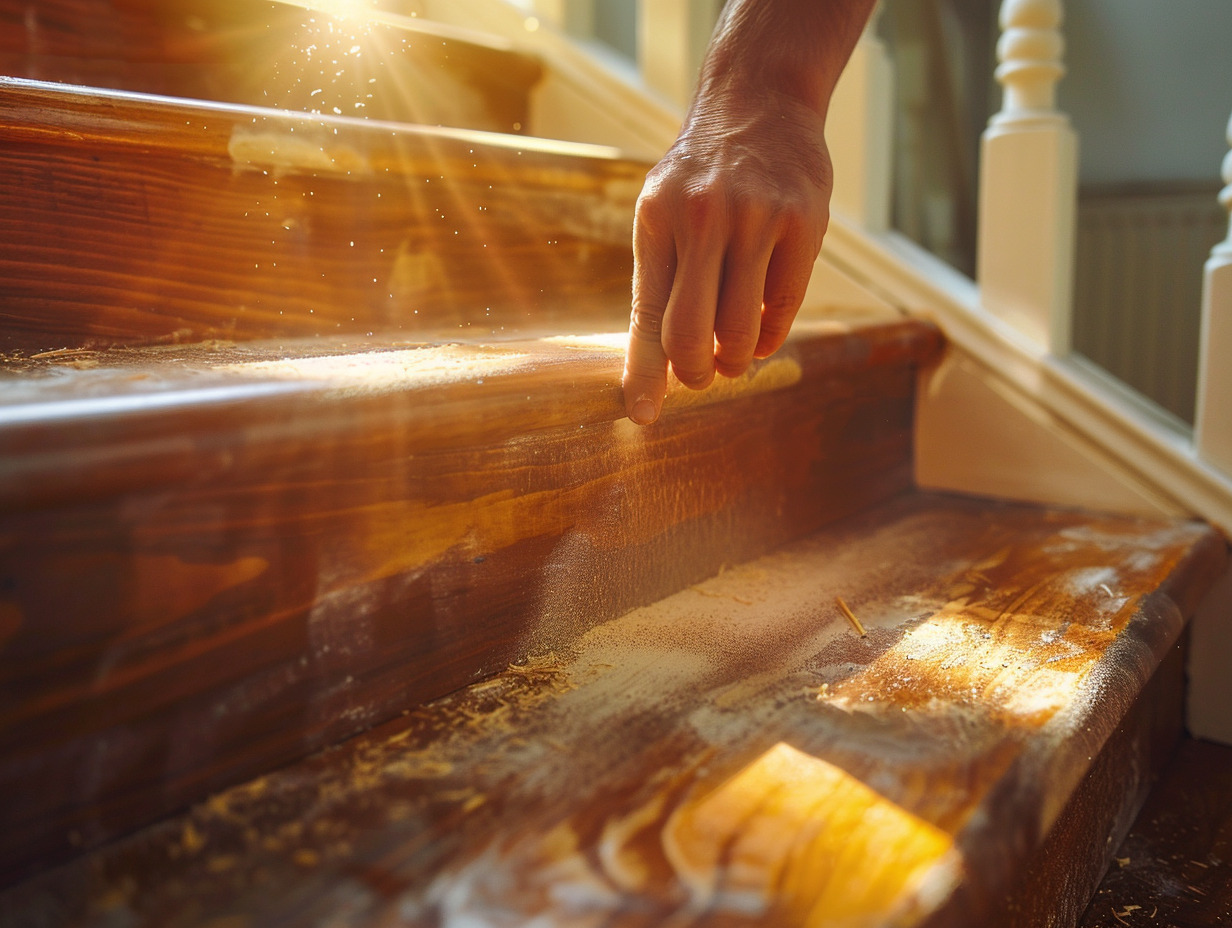
When the staircase starts to sing underfoot, various strategies are available to residents seeking tranquility. A first reflex is to use products like linseed oil or talc, known for their ability to reduce friction and penetrate even the smallest gaps. Talcum powder, generously sprinkled, settles between the treads and risers, thus dampening the squeaks. Linseed oil nourishes the wood and allows for natural and lasting lubrication. These simple and inexpensive solutions can provide an immediate response to auditory discomfort.
Some situations require more extensive interventions. When the original nails or screws are no longer sufficient to maintain the integrity of the staircase, replacing or adding new fastening points becomes necessary. Using longer nails or suitable wood screws can restore the rigidity needed for a silent staircase. Sometimes, applying acrylic caulk between the different parts of the staircase can stabilize the whole and eliminate movements that may generate squeaks.
For cases where the treads reveal voids or cracks, wood filler becomes the ally of renovation. This material, chosen according to the wood species of the staircase, effectively fills imperfections. After drying, careful sanding and an appropriate finish ensure a discreet and aesthetic repair while preserving the character of the wood.
These methods, when applied with care and precision, lead to a silent staircase that functions well. Renovation work, whether carried out by professionals or knowledgeable amateurs, should always take into account the nature of the wood, the use of the staircase, and environmental conditions to ensure a lasting solution. The regained silence will then be a testament to a job well done, a repair that is not only useful but also respectful of domestic harmony.