Nineteenth-century parish records reveal consanguineous unions reaching up to 12% of marriages locally. Despite the canonical prohibition of unions up to the fourth degree, several rural communities have maintained endogamous practices over generations.
The distribution of rates varies significantly between departments, with persistent hotspots in the Southwest, Corsica, or the Hautes-Alpes. This regional pattern contrasts with the national average, which has been pulled down by rural exodus and increased mobility since the 20th century. The health consequences of these disparities remain a challenge for research and prevention.
Consanguinity in France: Current Overview and Key Figures
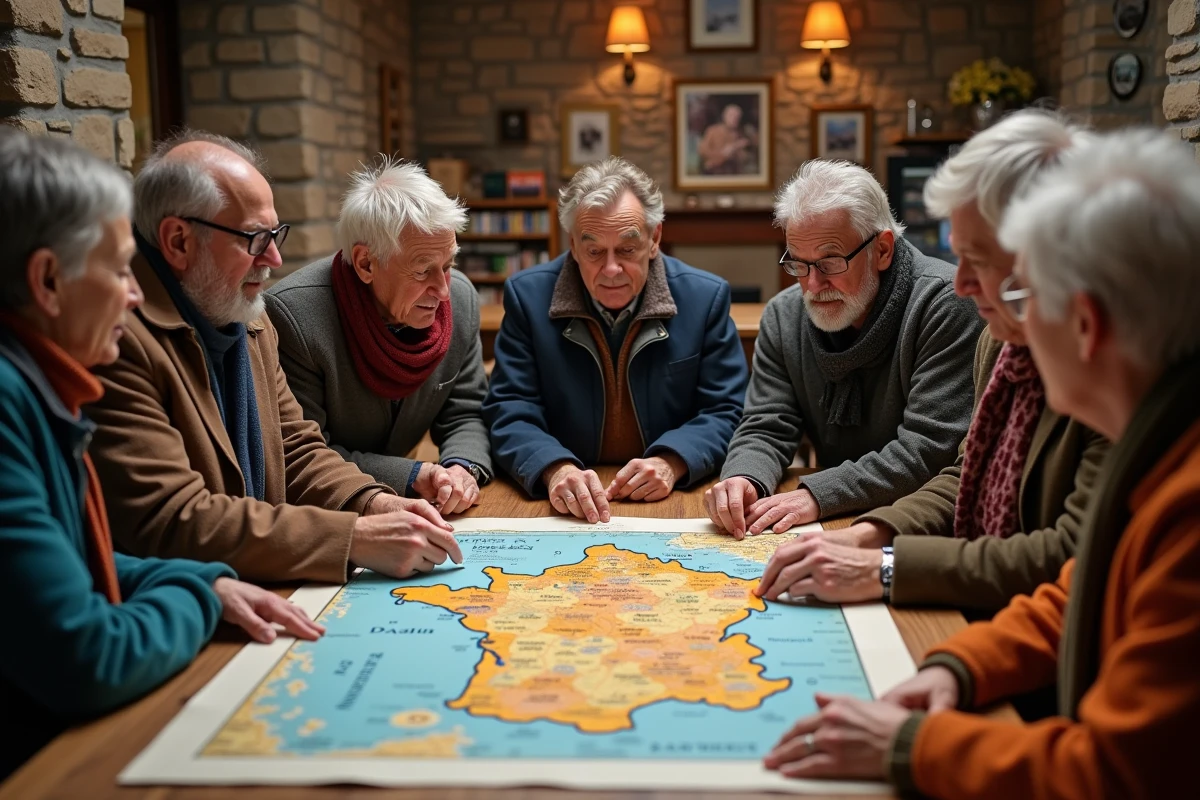
The geography of France tells the story of family alliances. The analyses of Jean Sutter and Léon Tabah, two references in last century’s demography, serve today as a solid benchmark: the national average of the consanguinity rate for marriages between first cousins now fluctuates between 0.2% and 0.3%. We are far from the peaks recorded in some provinces in the past. However, the map of consanguinity in France does not flatten easily: it reveals deep contrasts that resist demographic leveling.
In the Massif Central, the Pyrenean valleys, or the isolated territories in southern Corsica, archives continue to show a notable share of consanguineous marriages. Here, endogamy has long been reinforced by isolation, land dispersion, and the scarcity of opportunities outside the family circle. In contrast, large cities and industrial regions display almost nonexistent rates, reflecting social mixing and mobility born from rural exodus.
To compare territories, the coefficient of consanguinity acts as an objective thermometer. According to INED, it exceeds the threshold of 0.002 in the Hautes-Pyrénées or Creuse; it drops below 0.0005 in Île-de-France or Alsace. Overall, the trend is towards convergence, but regional disparities persist, reflecting deeply rooted habits. To explore these disparities, consanguinity in France by region provides a local overview, where each area still imprints its uniqueness.
Why Do Rates Vary by Region? Between Heritages, Isolation, and Social Dynamics
It is the local traditions that shape the geography of French consanguinity. Some regions, like the Massif Central or the Pyrenees, bear the imprint of generations of endogamy. There, geographical isolation has long hindered the movement of people: difficult rivers to cross, winding roads, impassable mountains… The topography imposed its rhythm, favoring alliances within the same village, canton, or sometimes even a simple hamlet.
Social dynamics have taken over from geography. Before massive urbanization, protecting family heritage often involved unions between first cousins or close relatives, under the watch of canon law and then civil law. The gaze of the neighborhood, group pressure, and the difficulty of meeting a partner from elsewhere all favored the perpetuation of endogamy.
The landscape has changed with urbanization and increased mobility. Industrial zones, cities, and their outskirts see consanguineous unions decline sharply. Rural exodus, a driver of population mixing since the 19th century, has accelerated the dilution of these practices. Family values, confronted with modernity, evolve as France transitions from a territory of tightly-knit enclaves to a more open society. Yet, regional disparities persist, indicators of local histories that still leave their mark on demographics.

Consequences for Public Health and Genetic Diversity: Understanding the Stakes for Tomorrow
The coefficient of consanguinity is not just a number: it raises concrete debates for public health. In some territories, the proportion of consanguineous marriages, unions between first cousins or relatives, remains above the national average. This has real consequences for genetic diversity. The less diversity there is, the more certain recessive genetic diseases, long invisible, find expression.
Scientific work, following in the footsteps of Sutter and Tabah, points to an increased risk for several non-communicable diseases: heart diseases, chronic respiratory disorders, diabetes, and even rare cancers. Public health statistics particularly highlight departments where endogamy was long the norm, such as the Massif Central or the central Pyrenees.
In light of these realities, several action paths are emerging to limit risks:
- deploy premarital screening programs in high coefficient areas;
- more systematically offer genetic counseling to couples from families involved in repeated unions;
- enhance awareness through health education programs tailored to each territory.
Taking the map of consanguinity in France seriously is to pave the way for collective reflection on the prevention of hereditary diseases and the maintenance of genetic diversity. Careful monitoring of regional rates, combined with observation of matrimonial practices, will impact the health of future generations. The figures of yesterday invite themselves into today’s challenges: France, a mosaic of practices, continues to write in its genes the story of its territories.