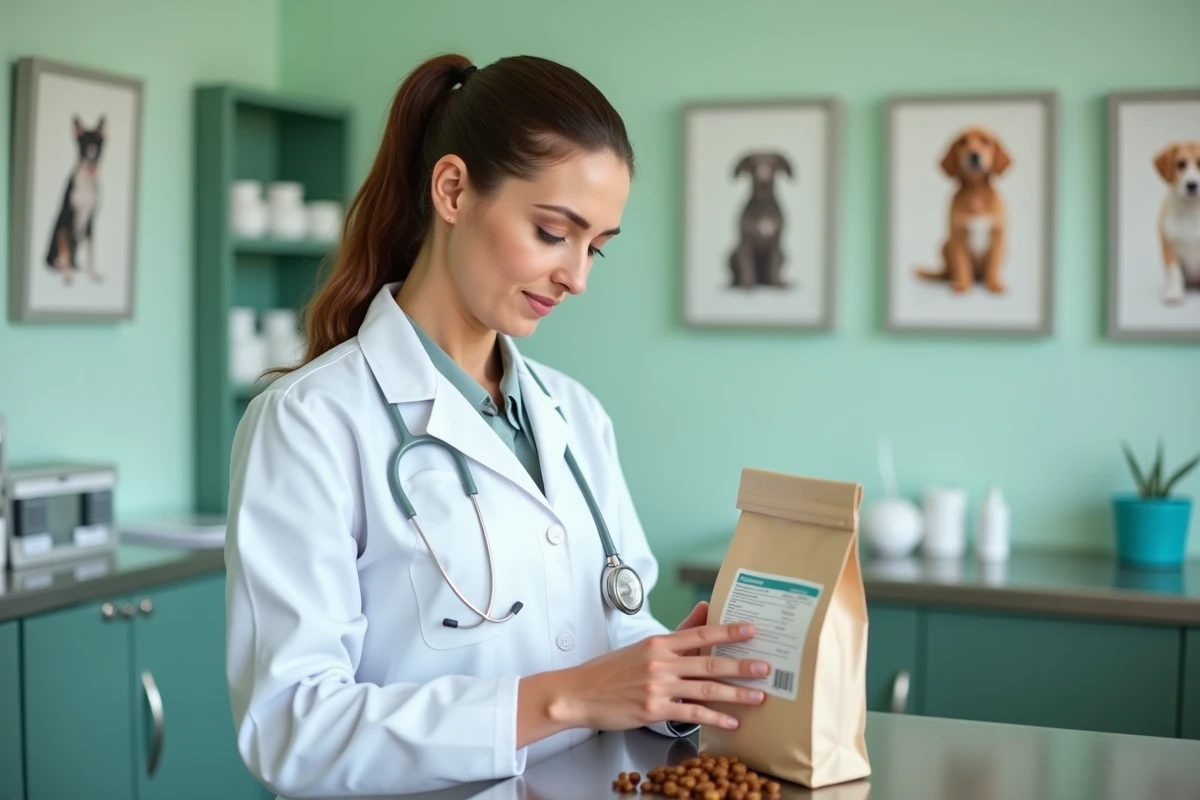
Ownat kibble, manufactured in Catalonia by the company Cotecnica, is found on numerous online sales platforms in France. Their “natural” positioning and multiple ranges (Classic, Ultra, Prime, Grain Free) complicate the decision-making process for dog and cat owners. What do veterinary nutritionists really look for when evaluating these products, and on what criteria do their opinions differ based on the chosen range?
Comparison of Ownat ranges: proteins, carbohydrates, and cereals
The first reflex of a veterinary nutritionist when faced with kibble is to examine the analytical rate, not the marketing discourse. At Ownat, the differences between ranges are significant.
| Range | Proteins | Carbohydrates | Cereals | Fresh meat |
|---|---|---|---|---|
| Ownat Classic | Low | High | Corn, wheat | Low proportion |
| Ownat Ultra | Intermediate | Moderate | Present (rice) | Present |
| Ownat Grain Free Prime | Satisfactory | Low | None | In large quantity |
The Classic range shows a composition poorly suited to the diet of carnivores according to several veterinary feedbacks. The intensive use of corn and wheat, combined with a low protein rate, places it behind the brand’s higher ranges.
In contrast, the Prime range presents a nutritional profile that is much more consistent with a veterinarian’s expectations: proteins and carbohydrates within acceptable ranges, fresh meat at the top of the ingredient list, and absence of cereals. Practitioners compiling veterinary reviews on Ownat kibble agree on this point: the brand is not judged overall, but range by range.
FEDIAF guidelines and gentle cooking: what veterinary nutritionists check
Veterinarians specializing in nutrition do not limit themselves to the percentages of proteins and fats. Their reading grid is based on FEDIAF recommendations, the European reference that defines nutritional thresholds for a food to be classified as “complete”.
Ownat claims that its recipes comply with these standards. This is a prerequisite, not a competitive advantage: any kibble sold as complete food in Europe must meet FEDIAF thresholds. What nutritionists look at next is the actual digestibility of proteins and the mineral balance, particularly the calcium level.
On this last point, some Ownat recipes present a sometimes high calcium level, which can pose problems for growing dogs or cats prone to urinary disorders. This detail, rarely mentioned in public reviews, is part of the warning signals that veterinarians monitor on a technical sheet.
The gentle cooking process, a point to nuance
Ownat highlights a low-temperature cooking process intended to preserve nutrients. The principle is real: a lower temperature limits the degradation of certain vitamins and amino acids. Veterinarians acknowledge the interest of the process on paper.
The limitation lies in the absence of independent data published comparing the digestibility of Ownat kibble cooked “gently” to that of other premium brands cooked conventionally. Without comparative studies, the benefit remains theoretical.
Ownat Grain Free kibble: a choice not always justified according to veterinarians
The grain-free kibble market has exploded in recent years, and Ownat has taken a visible place with its Grain Free and Prime ranges. The “grain-free” trend appeals to owners concerned about their pet’s health.
French-speaking veterinary nutritionists adopt a more measured stance. Since the alerts from the US FDA regarding possible links between certain 100% grain-free diets and cases of dilated cardiomyopathy in dogs, the “grain-free” criterion is no longer considered an automatic guarantee of quality.
What several nutritionists now recommend:
- Evaluate the overall energy density of the kibble, not just the presence or absence of cereals
- Check the mineral balance (calcium, phosphorus) and the omega-6/omega-3 ratio, which is deemed satisfactory in all Ownat ranges except Classic
- Prioritize measured digestibility over the raw ingredient list
The Ownat Prime grain-free option remains a coherent choice for a neutered cat or an active dog, provided that the choice is not based solely on the absence of cereals.
Ownat Classic versus Premium ranges: a gap that veterinarians do not downplay
The Classic range concentrates the clearest reservations from the profession. Veterinarians assign it a significantly lower rating than that of the higher ranges. Several elements explain this gap:
- A massive use of corn and wheat, sources of carbohydrates with a high glycemic index
- A low proportion of fresh meat compared to the Ultra and Prime ranges
- The absence of precise information on omega levels in the Classic range, while this data is available for the other ranges
- A carbohydrate level too high for daily use in a sedentary cat
Conversely, the Prime and Ultra ranges benefit from a more favorable view. Transparency regarding analytical rates, the use of local fresh meat, and a good omega-6/omega-3 ratio are arguments that veterinarians readily validate for daily feeding.
The price reflects this hierarchy: the Classic range positions itself as an accessible entry-level option, while the Prime is in the premium segment. The budget often determines the chosen range, but the nutritional gap is real.
Veterinarians evaluating Ownat do not make a monolithic judgment on the brand. The recommendation depends on the range, the animal’s profile (neutered, growing, active, or sedentary), and a precise analysis of the technical sheet. Recognizing that Ownat produces both a Classic range deemed mediocre and a Prime range considered satisfactory helps avoid shortcuts, in either direction.