A move, a water damage incident, a burglary: we only think about the passport on the day we need it and it is nowhere to be found, damaged, or stolen. Storing your passport at home is not just about choosing a drawer. The document contains a biometric chip with sensitive personal data, making it a target for identity theft as well as a fragile item in the face of domestic disasters.
Biometric Chip and Identity Theft: Why the Passport is Not Just a Piece of Paper
We often store the passport with bills or health records. The problem is that this document is nothing like an administrative letter. The RFID chip it contains stores biometric data related to the holder: digitized photo, fingerprints, complete civil status.
The Ministry of the Interior reminds us in its fact sheet on identity theft: limiting physical access to the passport reduces the risk of fraud. In practical terms, this means that the document should never be in a location accessible to a visitor, a tradesperson, or an outside contractor. An entryway drawer, a living room catch-all, or a handbag left in the hallway are risky locations.
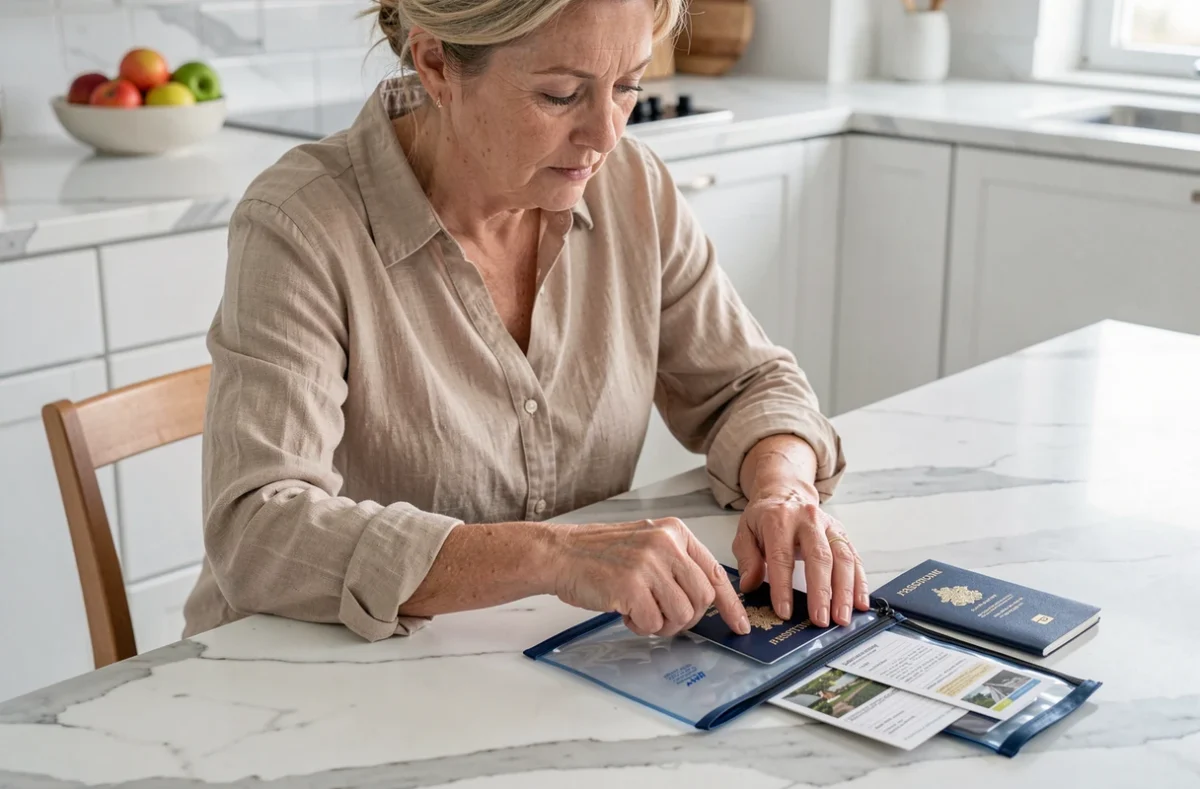
For those who also want to find an Amazon passport holder to physically protect the document and block RFID reading from a distance, it is a useful addition, but the holder does not replace a thoughtfully chosen storage location.
Fireproof Safe or Discreet Hiding Place: Choose According to Real Risk
We often contrast the safe with the home hiding place, as if they were two philosophies. In practice, they do not protect against the same threats, and the right choice depends on the dominant risk in your home.
Protection Against Theft
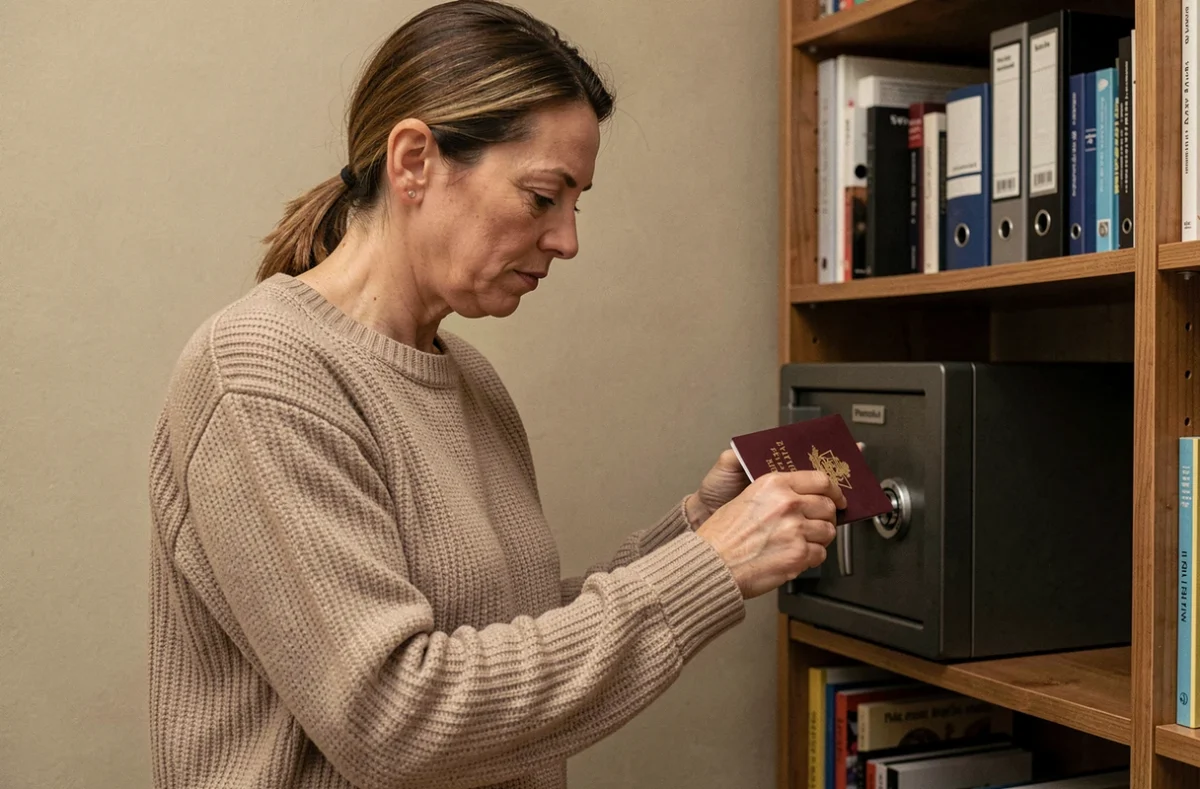
A discreet hiding place (fake book, false bottom of a drawer, innocuous box in a bedroom closet) is sufficient against opportunistic theft. A burglar typically spends little time in a home and targets visible valuables. A passport slipped into a binder, among a desk shelf, is unlikely to be spotted.
A safe fixed to the wall or floor complicates the task for a determined thief. However, a small portable safe that is not secured can be taken as is.
Protection Against Fire and Flood
This is where the discreet hiding place shows its limits. Water damage in an apartment can soak an entire piece of furniture in a matter of hours. A fire destroys paper long before firefighters arrive.
A fireproof and waterproof safe protects the passport from destruction by disaster. They can be found at accessible prices, and the fire resistance standard is usually indicated on the product. For a passport that is rarely used, this is the most comprehensive option.
- Fireproof safe fixed to the wall or floor: protects against theft, fire, and water. Suitable for single-family homes or apartments with dedicated storage space.
- Fireproof pouch in a locked cabinet: a lighter compromise, useful in an apartment if a safe cannot be fixed. Does not protect against targeted theft.
- Discreet hiding place alone (fake book, false bottom): protects only against opportunistic theft. To be combined with a secure digital copy to mitigate the risk of disaster.
Digital Copy of the Passport: Mistakes That Expose Your Data
Making a copy of your passport in case of loss or theft abroad is a common reflex. We keep it on our phone, in our email, or on a cloud. The problem is that this copy is itself sensitive data that needs protection.
The CNIL recommends data minimization and limiting their retention period. Keeping a passport photo indefinitely in your gallery, accessible without a password, is like leaving the document on a digital coffee table.
Here’s what works:
- Store the copy in an encrypted space, protected by a strong password and, if possible, two-factor authentication (secure file manager app or digital safe).
- Do not leave the copy in an unprotected messaging app or email, where it remains indexed and accessible in case of account hacking.
- Delete the copy once the trip is over. You can recreate one before the next departure. This reduces the exposure window.
- Avoid sending the copy via SMS or unencrypted instant messaging. These channels often retain attachments on third-party servers.
Ideal Location for the Passport at Home: Concrete Selection Criteria
Rather than making a list of hiding places, you save time by applying three filtering criteria to any location considered.
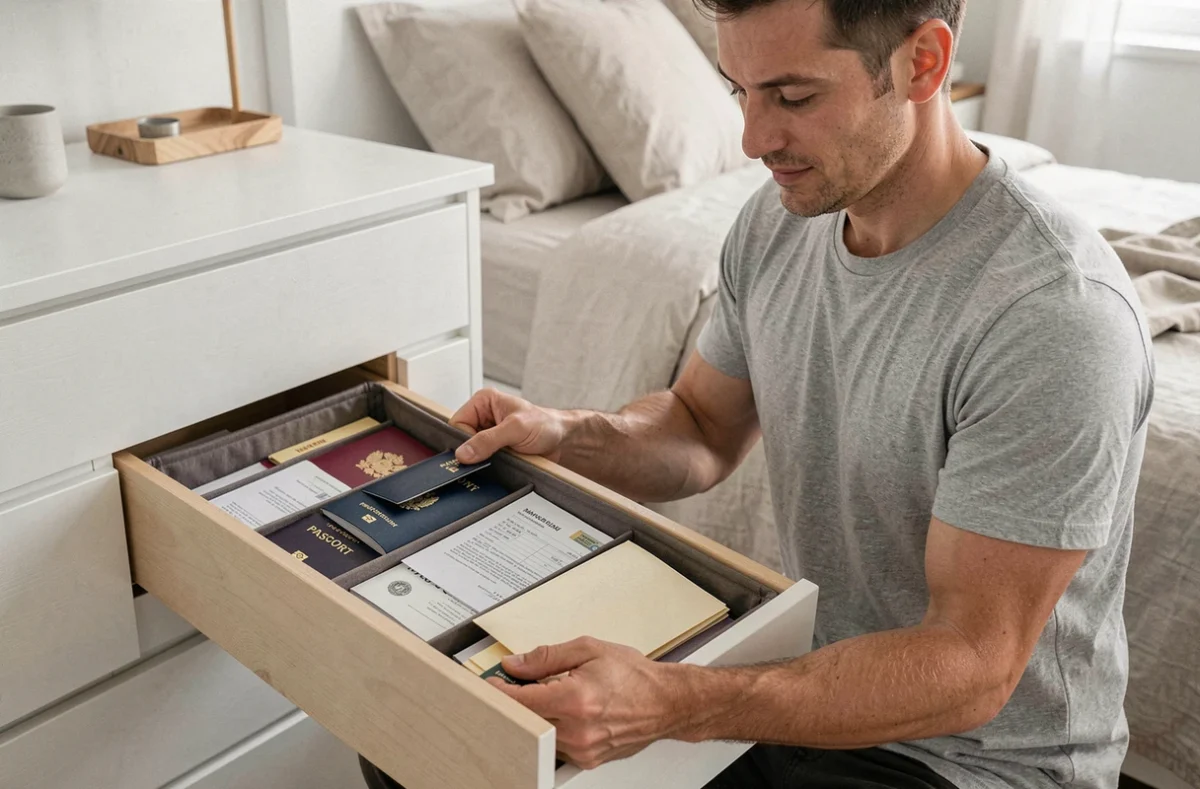
First criterion: is the location out of sight and out of reach for anyone outside the household? If a plumber, babysitter, or guest can stumble upon it, it’s a bad location. Master bedroom, locked office, locked dressing room: these areas naturally limit access.
Second criterion: is the location protected from humidity and heat? A garage, an uninsulated basement, or an attic exposes the passport to temperature and humidity variations that degrade the paper and can damage the chip. Feedback varies on the actual resistance of the chip to extreme conditions, but the paper does not forgive.
Third criterion: will you find the passport at 6 AM the day before a trip? An overly clever hiding place becomes a trap when you are in a hurry. The location should be fixed, known to at least one other person in the household, and the same from year to year.
A passport stored in a fireproof safe, in the bedroom, inside an anti-RFID holder, meets all three criteria. But a simple lockable binder in a closed office also does the job if the risk of disaster is low in your home. The perfect location does not exist in itself: it depends on your configuration, lifestyle, and the time between trips.